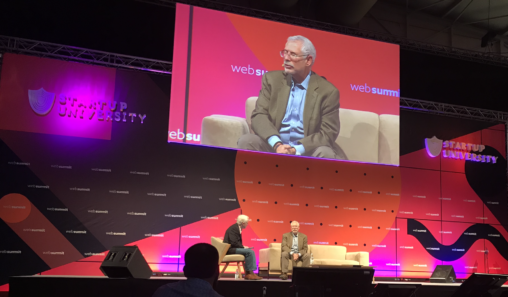
Highlights from the 3rd TEDxEdges event on October, 1st 2011 in the
Champalimaud Centre for the Unknown, Lisboa.
More on www.tedxedges.com
No tempo em eu que roubava folhas de letras de decalcar decadry do meu pai para identificar os meus cadernos, percebi que não era fácil encontrar o espaçamento adequado entre duas letras. Mesmo usando uma régua não conseguia produzir o mesmo resultado da minha percepção da distância certa: o “i” tinha de ficar mais afastado de um “l” do que de um “o”. Só mais tarde, quando comecei a usar o LaTeX para compor documentos, percebi que a isto se chamava kerning e que o que importa manter constante é a área do espaço entre as letras. No caso anterior o “i” e o “l” limitam uma área rectangular mas no caso do “o” é necessário considerar também o espaço por cima e por baixo da parte curva da letra. Não sendo agora comum o uso das letras de decalcar, este jogo de kerning ajuda a perceber a importância da boa composição tipográfica, avaliando a capacidade do jogador em distribuir o espaçamento entre as letras de uma palavra.
Kern Type, the kerning game
Although the European tech job market is different from the American, this infographic gives a good overview of the needs of 3 big tech companies. Important recomendation: pick the right area of study.

Created by: Masters Degree

A recent Schumpeter column in “The Economist” referred the report “Opportunities for Efficiency and Innovation: A Primer on How to Cut College Costs,” by Vance Fried of Oklahoma State University. Is it possible to provide a first-class undergraduate education for $6,700 a year rather than the $25,900 charged by public research universities or the $51,500 charged by their private peers?
At IST we receive around €3,800 ($5,320) from the government for each student per year and we charge €1,000 ($1,600) for tuition. I believe we provide first-class undergraduate education and research.
The article: http://www.economist.com/node/18926009?frsc=dg|a
The report: http://www.aei.org/docLib/Opportunities-for-Efficiency-and-Innovation-Fried-FINAL.pdf

Google transferred to HTC a collection of patents originally from Palm and Motorola. The patents were added to a suit that HTC filed against Apple.
http://paidcontent.org/article/419-htc-sues-apple-using-mobile-patents-obtained-from-google/
Resposta a uma questão sobre a qualidade do ensino em Portugal.
Com o ensino superior é diferente?
Todos os meus filhos foram e irão para a Universidade portuguesa. O ensino superior português é de elevadíssima qualidade. As nossas escolas de engenharia são das melhores do mundo. O Instituto Superior Técnico é uma das melhores escolas de engenharia do mundo. E eu sei, porque temos na Hovione engenheiros vindos das melhores escolas do mundo.
http://www.ionline.pt/conteudo/146726-peter-villax-os-portugueses-nao-gostam-trabalhar

I am not so sure about getting way from the computer and about singing in the shower, but I am certain about making lists and breaking rules. And, of course, *always* carry a notebook…
Amazing article by Kim Zetter in wired magazine, with a detailed report on the discovery of the world’s first real cyberweapon. A computer in a boot loop due to a virus led to the explanation of why a previously secret Iranian nuclear enrichment plant needed to replace between 1,000 and 2,000 centrifuges over a few months. A John Le Carré style narrative with software engineers in the role of spies. The virus was first detected on June 27, 2010 and the story includes the assassination of Majid Shahriari, a quantum physicist who worked with the Iranian Atomic Energy Commission, on November 29, 2010, when motorcycle riders attached a bomb to his car.

The full article here:
http://www.wired.com/threatlevel/2011/07/how-digital-detectives-deciphered-stuxnet/all/
The Stuxnet virus timeline:
A video produced for the Royal Society’s Summer Science Exhibition 2011 that includes work and interviews with researchers of the LIREC project.
The importance of the face in human-to-human communication and how can we use this knowledge in the design of robots that have to work and interact with humans.
More about this exhibit here.
Luis Caldas de Oliveira has been teaching, for over 20 years, signal processing courses to students of Electrotechnical and Computer Engineering, Computer Science and Aerospace Engineering at Instituto Superior Técnico (IST) (Technical University of Lisbon).
He is currently member of the Management Board of IST and a researcher in the Spoken Language Systems Laboratory of INESC-ID.
Luis Caldas de Oliveira can be reached at:
lco@luiscaldasdeoliveira.com